 Thanks! Your message has been successfully sent...

Unique Hand Crafted Bowls
Made in Australia
ABOUT ME
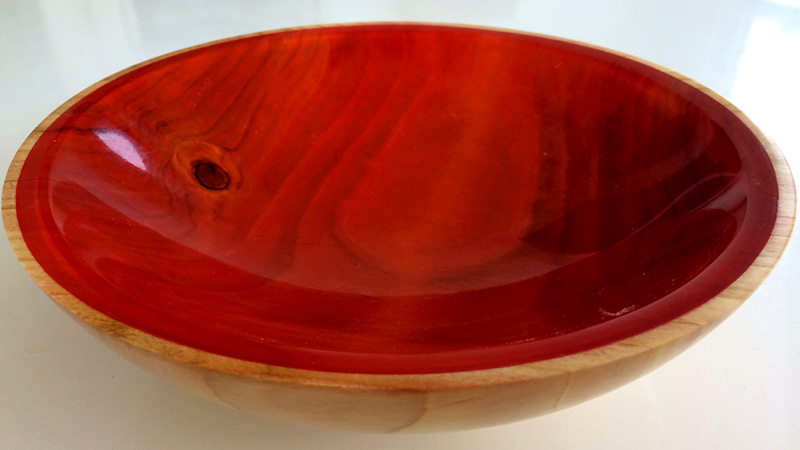
Phil Young is a wood turner who combines immaculately turned timber with colourful resins to produce unique statement pieces. Timber is, whenever possible, sourced from local arborist's and farmers.
Aside from being responsible, this approach provides access to natural features that are rarely found in commercially sourced timbers including charcoal from bush fires, damage from fungal infections and stress fractures.
The challenge and enjoyment is to work the natural features of the timber using resin to enhance the character of the final pieces.
Please note that all available works are displayed at and sold through the Sturt Gallery Mittagong
email: shop@sturt.nsw.edu.auphone: 02 4860 2083
WOODWORK GALLERY
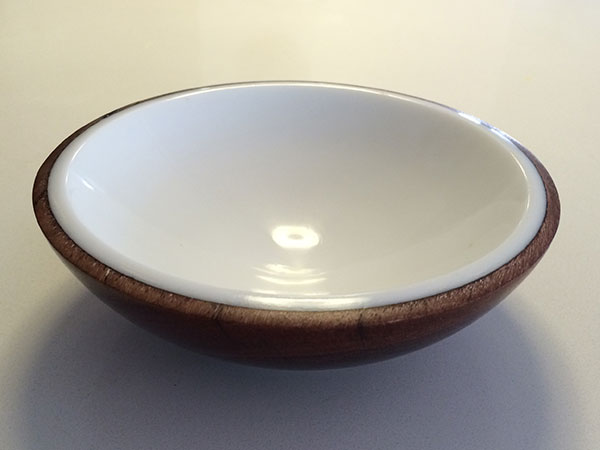
Coconut Bowl
I found a piece of quila
(PNG) that had been sitting forgotten for at least 10 years at the back
of a local timber supplier’s yard. Milling revealed rich grain and a
patina that can only be obtained from age and weathering. I was doubly
excited to find the piece as I had had in mind a design based on white
resin and had been in search for a suitable timber. I love the way the
two colours stand out but don’t compete with each other.
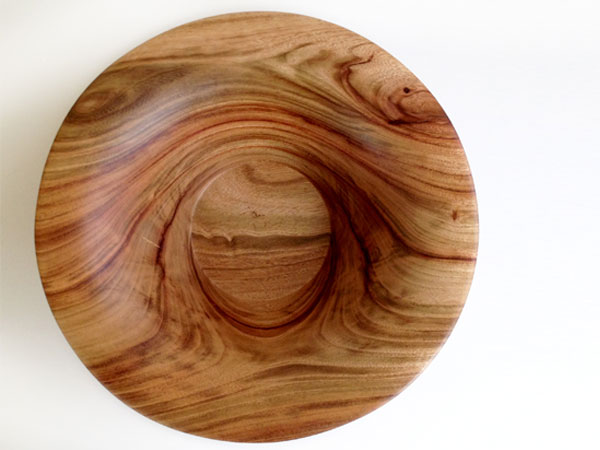
Rich Grain Camphor
Sourced from a paddock at
the base of the escarpment leading into the NSW Kangaroo Valley. As
soon as I began cutting into the log I knew that this was going to be a
special piece of wood. I am very pleased with the final design as the
deep curve of the bowl accentuates the richness and contrasts within the
timber whilst the deep rings carved into the outside of the bowl create
an eye catching piece of art.
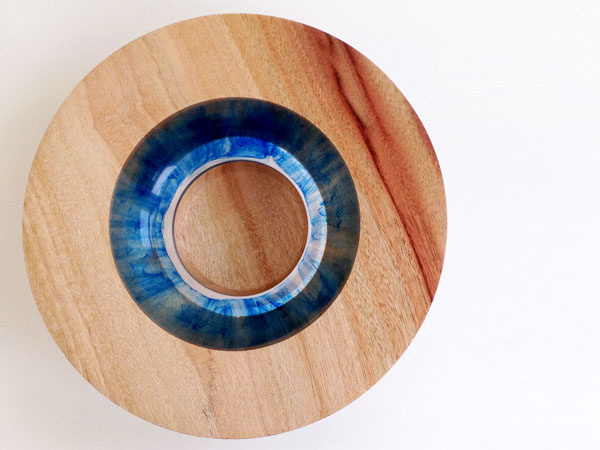
Blue Agate
Although a beautiful
piece of timber I felt that it would benefit from the incorporation of
resin to help accentuate the natural colours and graining. The blue
streaked crystal resin has been turned to enable light to enter into the
bowl from its sides, which helps to accentuate the design and create a
fun, bright and decorative bowl.
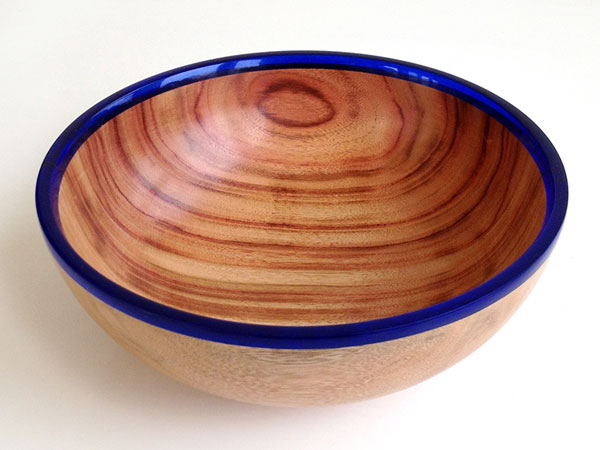
Blue Rimmed Bowl
The incorporation of a clear blue resin edge contrasts and
highlights the natural colour and figure of the timber. The design is
simple and functional though what I really like is the way that the
light catches the rim then draws attention to the timber itself.
Practical enough to put your chips into and elegant enough for the
display cabinet!
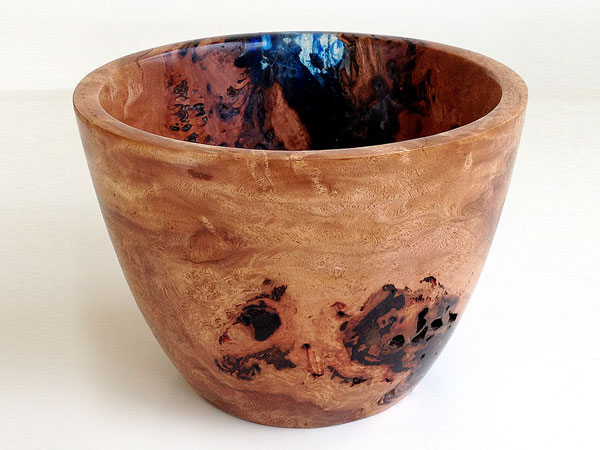
Fire Burl
I had no idea what I was stepping into when I first started
turning this bowl. The burl had been cut from a fire-scorched tree at
least twenty years earlier and was as hard as granite. Full of holes,
the only way I could turn it was to first fill it with resin – which I
played with to create the effect of natural looking agate. I decided to
keep the design very plain because of the abundance of character in the
timber and resin combination.
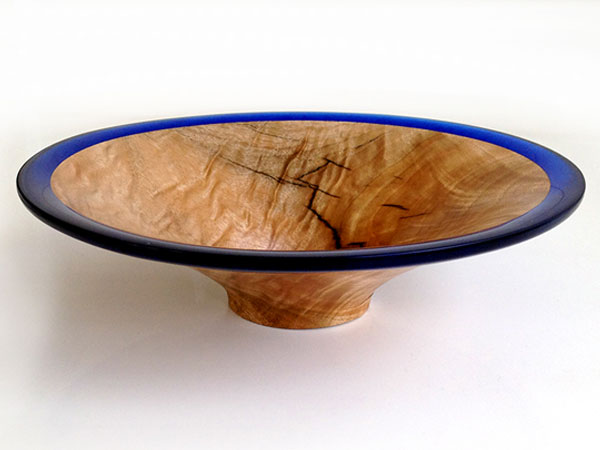
Delicate Camphor
Literally pulled out from the firewood pile, this cracked
piece of timber is full of feature and character enhanced even further
by its black fracture lines. The clear blue rim serves both to enhance
the design and structurally stabilize the finely turned and delicate
artwork. For many reasons, one of my favourites.
IN THE MAKING
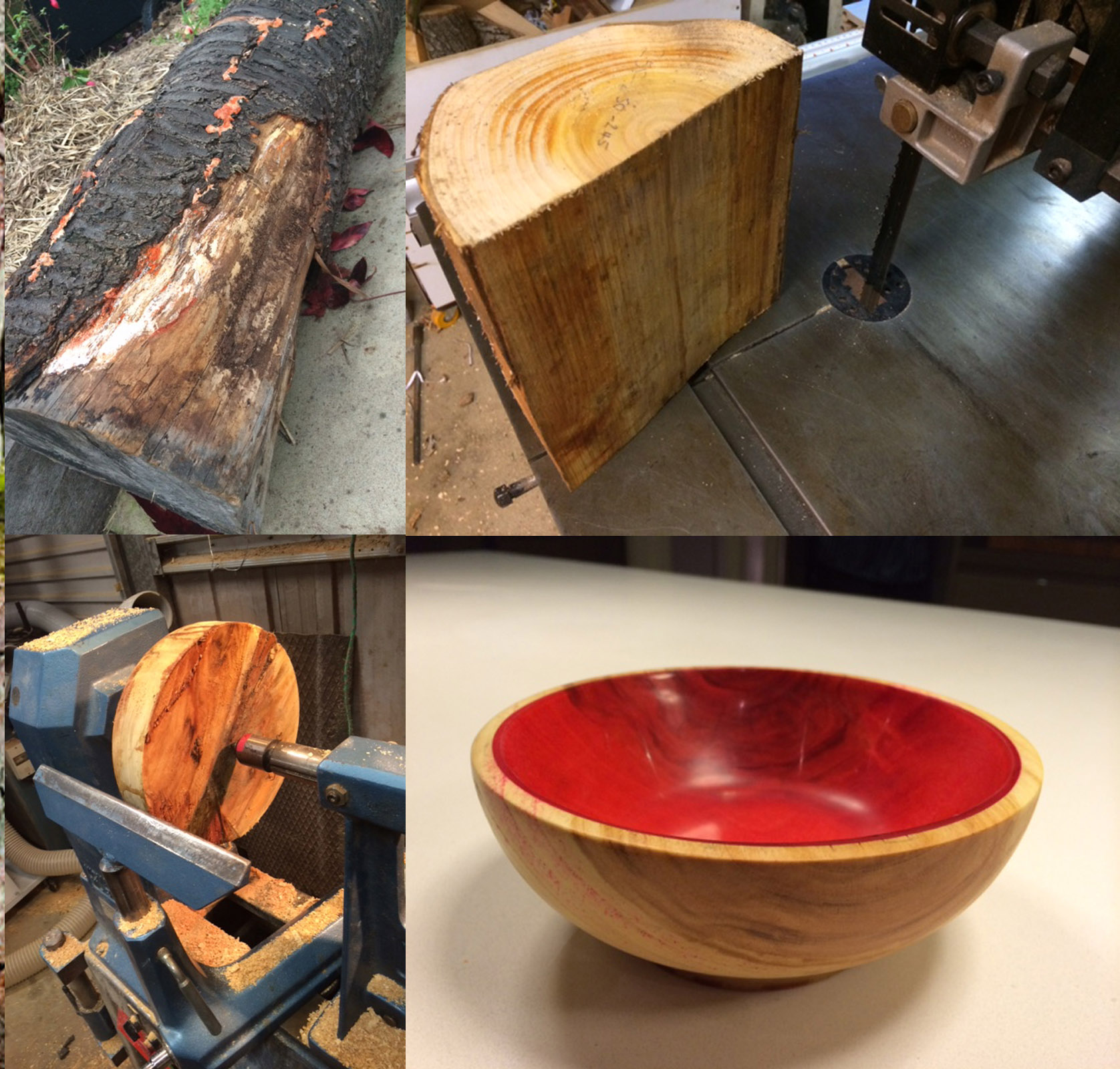
PERFECT WOOD
One of the joys of turning is searching for the hidden gems that can lay hidden in even the most rotted lump of firewood. Disease, fire and fungus can generate all sorts of unique features and colours that are only revealed once the timber has been cleaned back and oiled. Most pieces do end up being re consigned to the firewood pile, but then, every so often a piece emerges that starts the heart racing (OK, I’m easily excited). Having found the piece, sleep deprived hours can be spent thinking through exactly how it could be shaped; if resin needs to be applied and if so, what colours.
TURNING
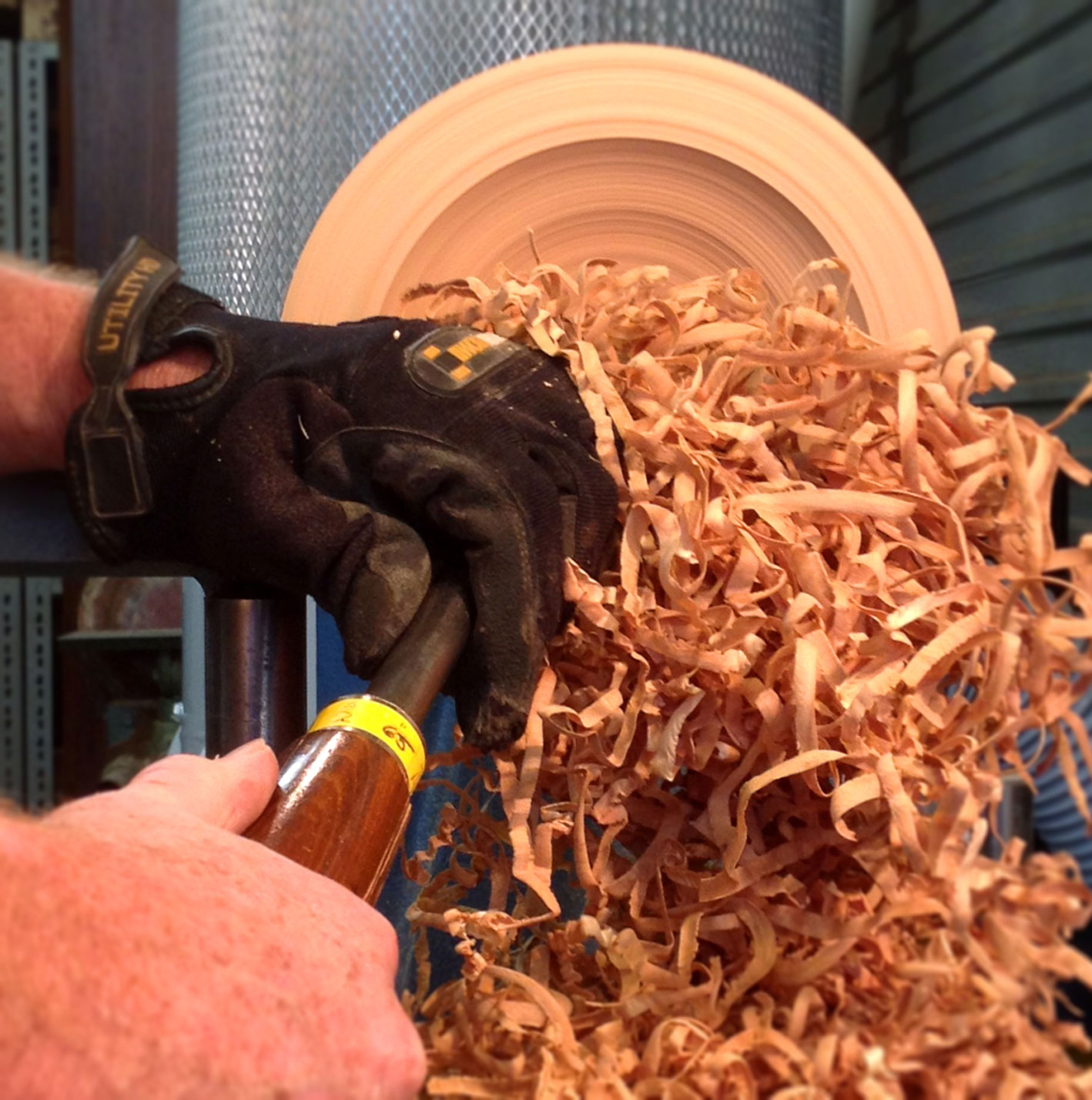
A large imbalanced chunk of timber is screwed as securely as possible to a faceplate. The lathe speed is turned down, safety goggles, dust mask and facemask protect against flying slivers and toxic dust. Nerves set is as the gouge is brought up to the spinning, vibrating timber. Wrists jar, pieces fly, the whole body seems to judder. Then, as the rough edges come away, the timber starts to speak out, telling you where it needs to be cut, how it needs to be shaped, what it wants to look like. The nerves relax and the timber sings as the chisel slices through sending the shavings flying into the air. Time disappears and a sense of wonder begins to develop from the beauty that lay trapped beneath. Always knowing that no matter how beautifully turned the piece is, all that it can ever do is to help to show how wonderful nature is.
FINISHING TOUCHES
Finishing the project and seeing just how the final piece has turned out is the most exciting part. It can also be the most frustrating and irritating. The one problem of choosing character rich gnarly old paddock timber is that the grain can run in every direction and the wood itself can have differing levels of hardness. This means that it is almost impossible to avoid tearing the fibers of the timber no matter how sharp the tools are or and much care is taken.
Torn fibers are the curse of every wood turners life. Even a small tear can take inordinate amounts of time to sand out and can, if impatience sets in, damage the piece of work.
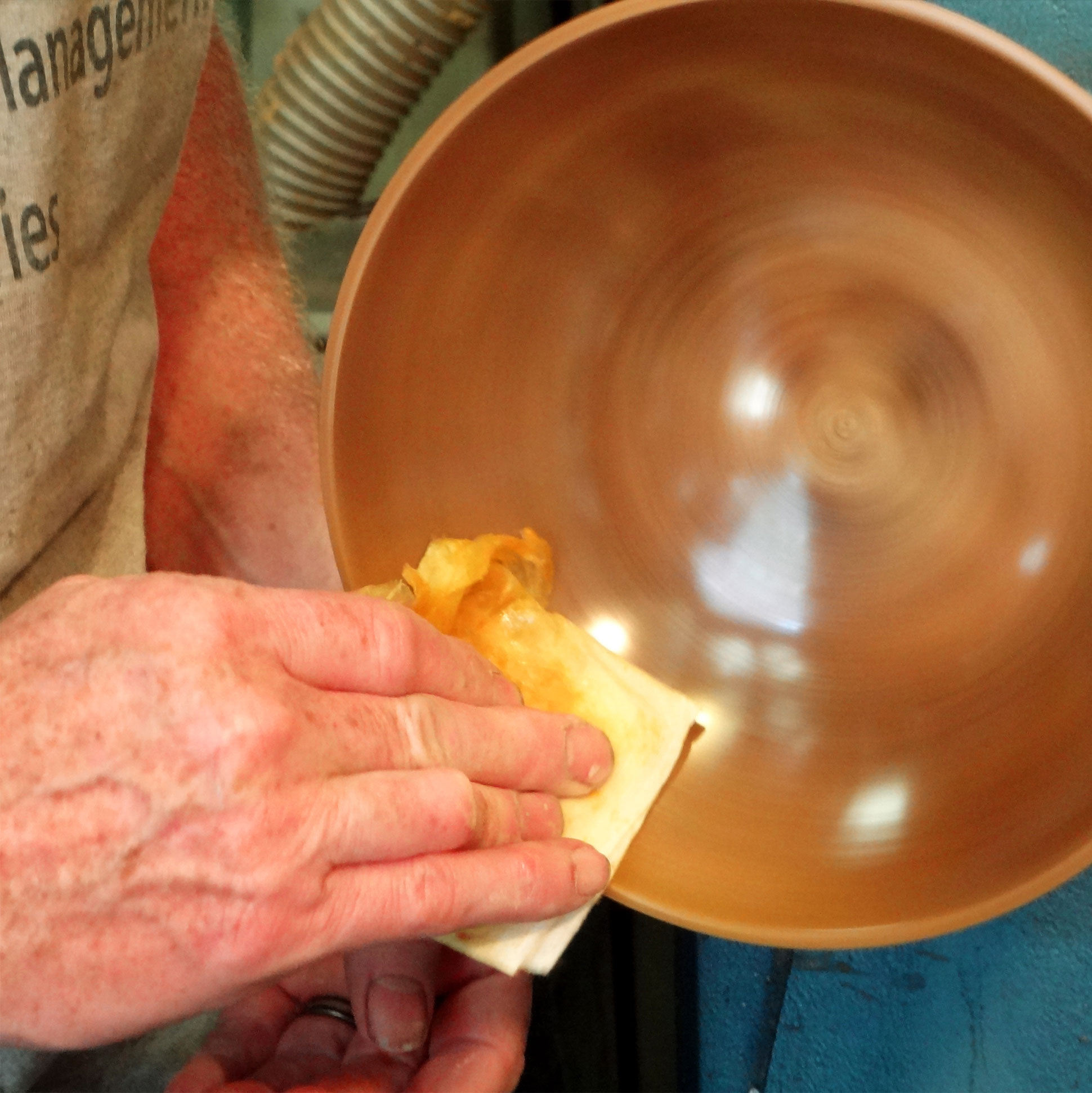
Once the piece has been prepared, a decision has then to be made on what finish to apply. This is a critical decision. The wrong choice can ruin the piece! A high sheen can enhance or detract depending on both the richness of the grain and/or the way in which light reflects off the shape.
My 'go to' finish is several layers of French polish which I then buff through 3 stages of cutting wax before applying a final hard wax polish.
Get in touch
I'd love to hear your thoughts and of course if you would like any further information on any of the bowls please drop me a line: